Two Models. Different Trade-Offs.
When logistics leaders evaluate transportation options, one of the most common points of confusion is the distinction between dedicated trucking and broader transportation services. They sound similar. The trade-offs are significant.
Choosing the wrong model — either over-committing to dedicated capacity you don't always need, or relying on brokerage-only solutions when your volume justifies something more stable — affects service reliability, cost predictability, and carrier relationship quality.
This guide explains both models clearly so you can make the right call for your operation.
What Is Dedicated Trucking?
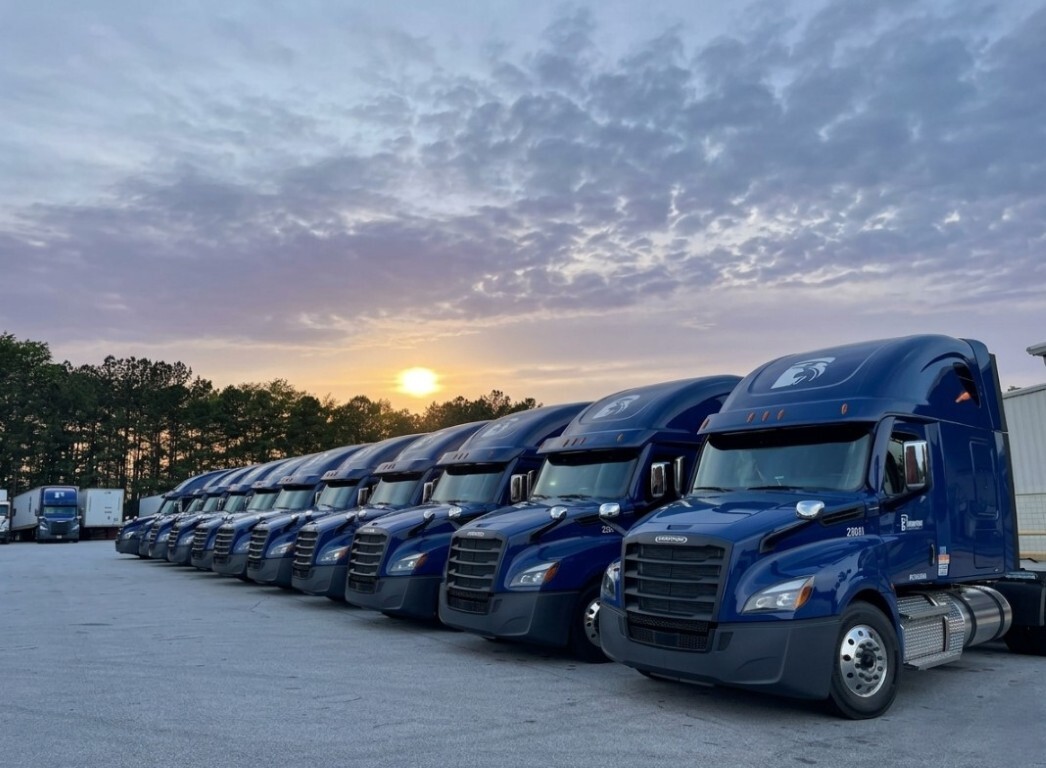
Dedicated trucking means a carrier assigns specific trucks, drivers, and equipment exclusively to your freight lanes — on an ongoing, contracted basis.
You get:
- Reserved capacity on your lanes regardless of market conditions
- Consistent drivers who learn your facilities, your shipping windows, and your requirements
- Predictable cost per mile or per load (no spot market exposure)
- Service level consistency that's difficult to achieve through brokerage
The trade-off: you pay for that capacity whether or not you use it. Dedicated contracts typically require volume commitments. If your freight volume fluctuates significantly — seasonally or by lane — dedicated capacity can leave you paying for trucks that aren't moving.
Dedicated trucking is the right answer when:
- You have high, consistent volume on defined lanes
- You ship to the same customer locations on a predictable schedule
- Service reliability and driver consistency are critical to your customer relationships
- You've experienced capacity disruptions through brokerage and the cost of those failures is high
What Are Transportation Services?
Transportation services is a broader category. It includes dedicated capacity, but also regional and long-haul truckload, intermodal, and managed transportation — coordinated through a combination of asset-based capacity and brokerage.
The key distinction: transportation services matches the right mode and capacity type to each lane and load, rather than applying a single model across your entire freight network.
This is particularly valuable for manufacturers with:
- Multiple distribution points served by different lane types
- A mix of high-volume committed lanes and low-volume spot lanes
- Freight that spans Southeast regional and long-haul national moves
- Peak seasons that create volume above what a pure dedicated model can absorb
An asset-based provider offering integrated transportation services gives you committed capacity where you need it and flexible brokerage capacity where committed capacity would be inefficient.
Side-by-Side Comparison
| Dedicated Trucking | Transportation Services | |
|---|---|---|
| Capacity | Reserved, exclusive | Committed + flexible |
| Cost structure | Fixed (predictable) | Variable by lane and mode |
| Volume requirement | High, consistent | Flexible |
| Driver familiarity | Same drivers, same lanes | Varies by load type |
| Spot market exposure | None | Managed |
| Seasonal flexibility | Limited | Higher |
| Best for | High-volume committed lanes | Complex or mixed freight networks |
The Risk of Getting This Wrong
Over-committing to dedicated capacity you don't need results in paying for idle equipment and drivers during low-volume periods. The per-load cost looks good on the contract; the total monthly cost looks worse on the P&L.
Under-committing — relying on spot brokerage for freight that should be on a dedicated contract — exposes you to capacity volatility. In tight markets, brokerage rates spike and capacity disappears. For manufacturers with time-sensitive production schedules or customer SLA commitments, that's a serious operational risk.
The most disciplined approach is a network analysis: examine each lane by volume, frequency, and service requirement, then assign the right model to each lane rather than forcing a single model across the entire network.
Not sure which model fits your freight network?
We help operations leaders analyze lane volume, frequency, and service requirements to structure the right capacity mix.
Why Asset-Based Matters
There's a meaningful difference between a carrier that owns its trucks and one that brokers all capacity.
Brown Integrated Logistics operates as an asset-based transportation provider — meaning we operate our own fleet of trailers alongside a broker network of 15,000+ carriers. When capacity tightens, our customers' freight moves on our equipment. Brokerage-only providers don't have that option.
Our transportation operations are focused on the Southeastern US — a region where Brown Trucking has operated for 60+ years and maintains the highest safety ratings from the USDOT and FMCSA. That regional depth means consistent capacity, documented safety performance, and operational knowledge that national carriers don't match at the local level.
For freight moving beyond the Southeast, our brokerage capability provides nationwide coverage through our carrier network — managed by the same team with the same service standards.
Common Questions
Can I use both dedicated and brokered capacity through the same provider?
Yes — and this is often the most effective model. A provider offering both gives you committed capacity on your core lanes with brokerage coverage for overflow, seasonal peaks, and non-core lanes. You get the reliability of dedicated without the cost exposure of over-committing.
What does a dedicated trucking contract typically look like?
Contracts vary by volume and lane commitment. Typical terms include minimum weekly load commitments per lane, a rate per mile or per load, and service level standards. Duration is typically one to three years with annual rate review provisions.
How do I know if my lanes qualify for dedicated capacity?
Lanes with consistent weekly volume — typically five or more loads per week on a single origin-destination pair — are good dedicated candidates. Lower-frequency lanes are usually better served through brokerage or spot market solutions.
Talk to Our Team About Your Network
The right answer for your freight depends on your lanes, your volume profile, and your service requirements — not a generic model.
Brown Integrated Logistics works with operations leaders at manufacturers and distributors to analyze transportation networks and recommend the right capacity structure for each lane. We operate asset-based transportation focused on the Southeast, with brokerage coverage for national freight, and integrated warehousing for customers who want to consolidate their logistics relationship.
Talk to Our Team to start a conversation about your freight network — no commitment required.