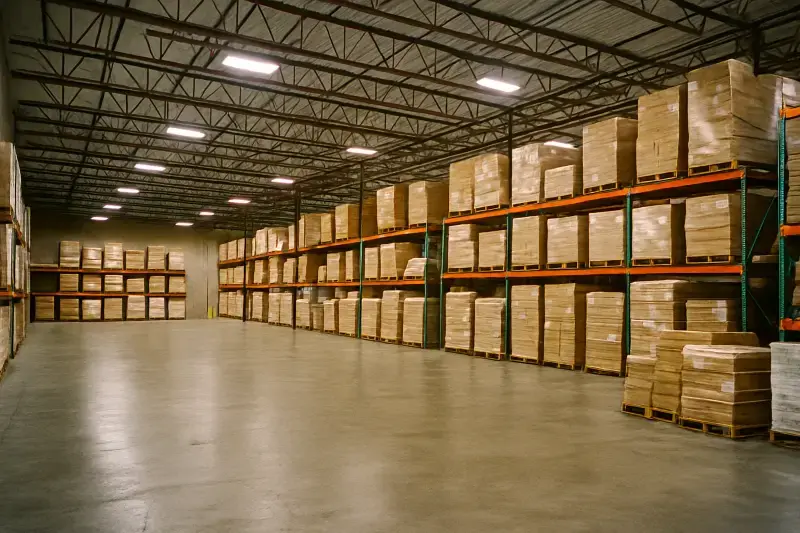
When businesses grow, expand into new markets, or face seasonal demand spikes, they often need flexible storage and distribution solutions. One of the most common options is a public warehouse.
This guide explains what a public warehouse is, how public warehousing works, what services public warehouses provide, how they compare with private warehousing, and when they make sense in a supply chain strategy.
What Is a Public Warehouse?
A public warehouse is a third-party storage facility that offers warehousing and distribution services to multiple businesses on a short-term or long-term basis. Unlike private warehouses, which are owned and operated by one company, public warehouses are open to multiple organizations that need space and services.
Public warehouses typically operate on a pay-as-you-go model, with fees based on the amount of storage space, labor, and services used.
How Public Warehouses Work
Public warehouses act as an extension of the supply chain. Businesses ship goods to the warehouse, and the operator manages storage, inventory handling, and outbound distribution. Services can scale up or down depending on demand.
- A beverage company might use a public warehouse during the summer when demand spikes.
- An e-commerce brand might position inventory in a public warehouse closer to consumer markets for faster delivery.
Public vs. Private Warehousing
Private Warehousing
Public Warehousing
Hybrid / Contract Warehousing
Services Offered in Public Warehouses
Most public warehouses go well beyond simple storage. The original guide highlights a range of common public warehousing services.
Inventory Management
Fulfillment
Cross-Docking
Transportation Management
Value-Added Services
Bonded Warehousing
Advantages of Public Warehousing
- Cost savings: no need for large capital investment in facilities or equipment.
- Flexibility: scale up or down based on seasonality or growth.
- Market access: many public warehouses are near ports, rail hubs, and major distribution markets.
- Expertise: the provider brings warehousing, labor, and logistics experience.
- Risk reduction: avoid long-term leases or underutilized space.
Potential Drawbacks to Consider
- Shared space: customers may not have complete control over layout or equipment.
- Variable costs: monthly charges can fluctuate based on usage.
- Limited customization: compared with private facilities, there is generally less ability to tailor processes.
Who Should Use a Public Warehouse?
The guide identifies several groups that often benefit most from public warehousing. fileciteturn23file0
SMBs
Importers / Exporters
Seasonal Businesses
The article also points to businesses testing new markets before committing to long-term warehouse space as a natural fit.
Key Factors When Selecting a Public Warehouse Partner
- Location: proximity to customers, ports, or key markets.
- Technology: whether the operation uses a modern warehouse management system.
- Scalability: ability to handle growth or seasonal spikes.
- Service offerings: whether the warehouse provides value-added services or only storage.
- Reputation and reliability: accuracy, safety, and customer service track record.
Conclusion & Next Steps
Public warehouses are a cost-effective, flexible solution for companies that need scalable storage and logistics support without the long-term investment of private facilities. Whether the business is a growing e-commerce brand, an importer, or a manufacturer with seasonal peaks, public warehousing can help streamline the supply chain.
Looking for a public warehouse near you? Contact us today.