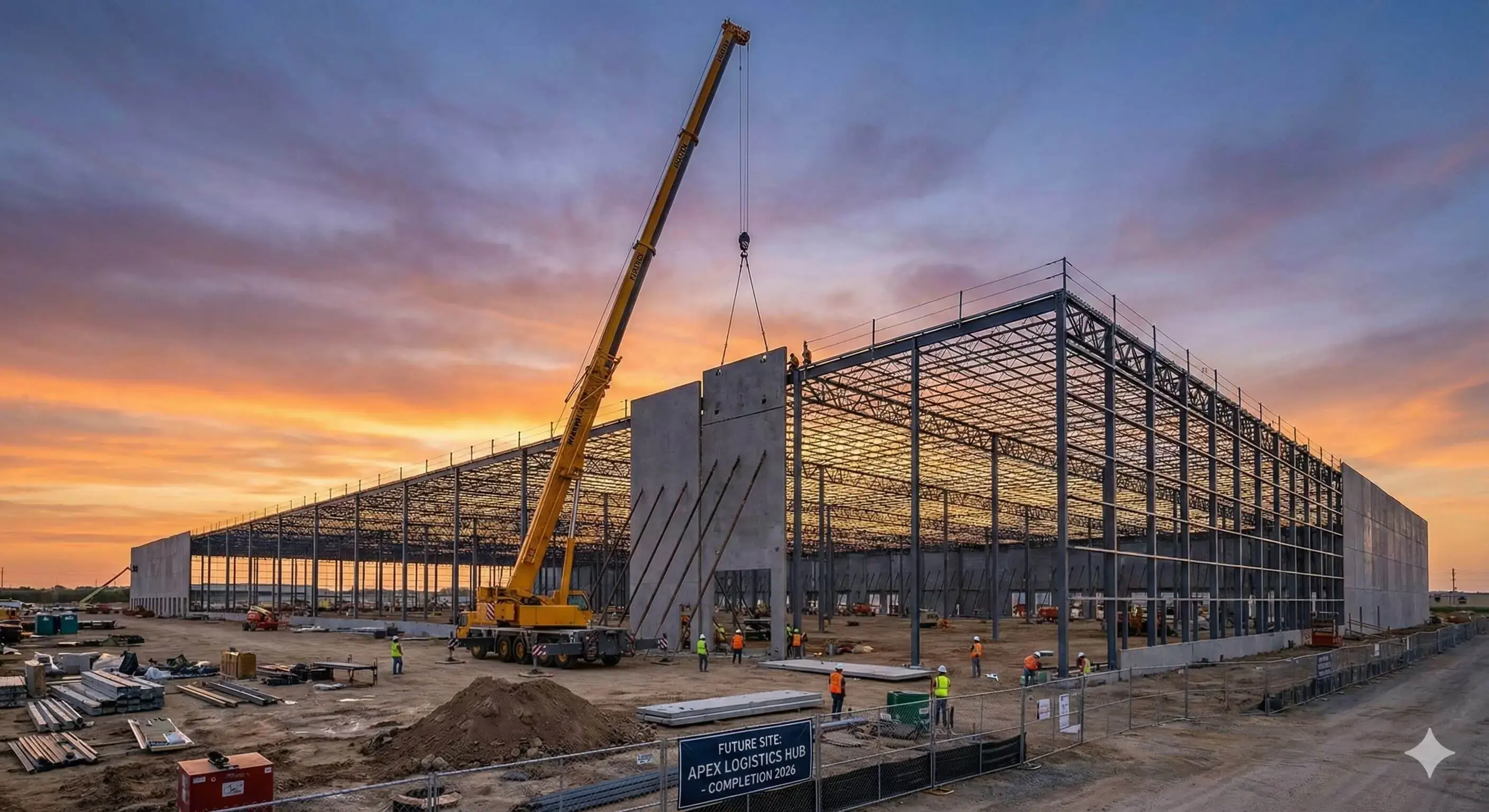
As we enter 2026, the industrial construction landscape is shifting from the frantic post-pandemic boom to a period of strategic stabilization. With the rise of reshoring, the explosion of AI-driven construction, and escalating material costs, the question for many businesses is not just where to build, but how much it will realistically cost.
Whether you are a 3PL provider expanding your footprint, a manufacturer needing near-port storage, or an investor eyeing industrial real estate, understanding the cost to build a warehouse in 2026 is critical. This guide breaks down the hard numbers, hidden expenses, and market trends defining U.S. warehouse construction this year.
The Short Answer: Warehouse Cost Per Square Foot in 2026
In 2026, the national average cost to build a standard warehouse ranges from $85 to $200 per square foot for a turnkey commercial facility. However, that number varies widely based on size, finish, and complexity.
Small Warehouses
Medium Warehouses
Large Distribution Centers
Note: these figures represent a standard dry storage warehouse. Specialized facilities cost significantly more.
The “Specialty” Factor: Cold Storage vs. Dry Storage
One of the biggest budget shockers in 2026 is the premium on specialized infrastructure. The article distinguishes clearly between standard dry storage, refrigerated warehousing, and facilities built to support automation.
Key Cost Drivers in 2026
1. Material Volatility & Tariffs
While supply chains have normalized since 2022, 2026 brings new challenges. Recent tariff adjustments on imported steel and aluminum are keeping shell costs high, especially for designs that depend on reinforcement steel or pre-engineered metal building systems.
2. The Labor Market
The construction labor shortage persists. Skilled trade wages are rising approximately 4–5% annually, and general contractors are passing those costs onto owners. He also notes that high-activity regions such as the Sun Belt and Texas may see steeper labor premiums.
3. Land & Site Preparation
“Flat and ready” land is increasingly scarce near major logistics hubs. Grading and site work can consume 20–25% of the total construction budget, while stormwater management and environmental mitigation are also adding cost and time.
Hard Costs vs. Soft Costs: Where Does the Money Go?
When budgeting a warehouse build, it is important to separate the physical build from the paperwork and professional services required to get the project across the finish line. His split is:
- Hard Costs (~70–80% of budget): concrete slab and foundation, steel framing and roofing, MEP, and interior build-out.
- Soft Costs (~20–30% of budget): architectural and engineering fees, permitting and impact fees, and insurance and legal costs.
How to Save Money on Warehouse Construction
- Go taller, not wider: maximizing vertical cubic footage can be more efficient than buying additional land.
- Consider pre-engineered metal buildings: for standard dry storage, PEMBs remain one of the most cost-efficient structure types. fileciteturn20file0
- Choose location carefully: moving outside a primary logistics hub may reduce land cost, but transportation tradeoffs still need to be measured honestly. fileciteturn20file0
Conclusion: Is 2026 the Right Year to Build?
2026 offers a more predictable environment than previous years, even though material costs remain elevated. He also points to stabilized interest rates and balancing vacancy rates in prime markets as reasons some businesses may feel more comfortable moving forward.
At the same time, he warns that pre-construction is taking longer than ever because of permitting, design, bidding, and regulatory backlogs. If you are planning a build, his advice is simple: start early and know your numbers.
Ready to explore your options? Whether you decide to build new or lease existing space, knowing the numbers is your first line of defense. Reach out to one of our solution designers if you have questions.